What risks does a website without an SSL certificate carry?
Imagine you have opened a large store on one of the busiest and most dangerous streets in the city. However, you leave the doors wide open and ask customers to leave their credit cards on the table without installing any locks, alarms, or security guards. Anyone passing by could simply reach out and take those cards or personal information. In the digital world, a website without an SSL certificate (operating only with HTTP) means exactly this doorless, lockless store. In the modern era, it doesn't matter how perfect your site's design is or how cheap your products are; if you don't have a digital "lock," you are leading both your customers and the future of your business toward a great abyss.
Open Doors and Cyber Traps: Key Risks
An SSL (Secure Sockets Layer) certificate is an invisible shield that encrypts the data exchange between the user's browser and your site's server. Without this shield, your business faces the following critical risks:
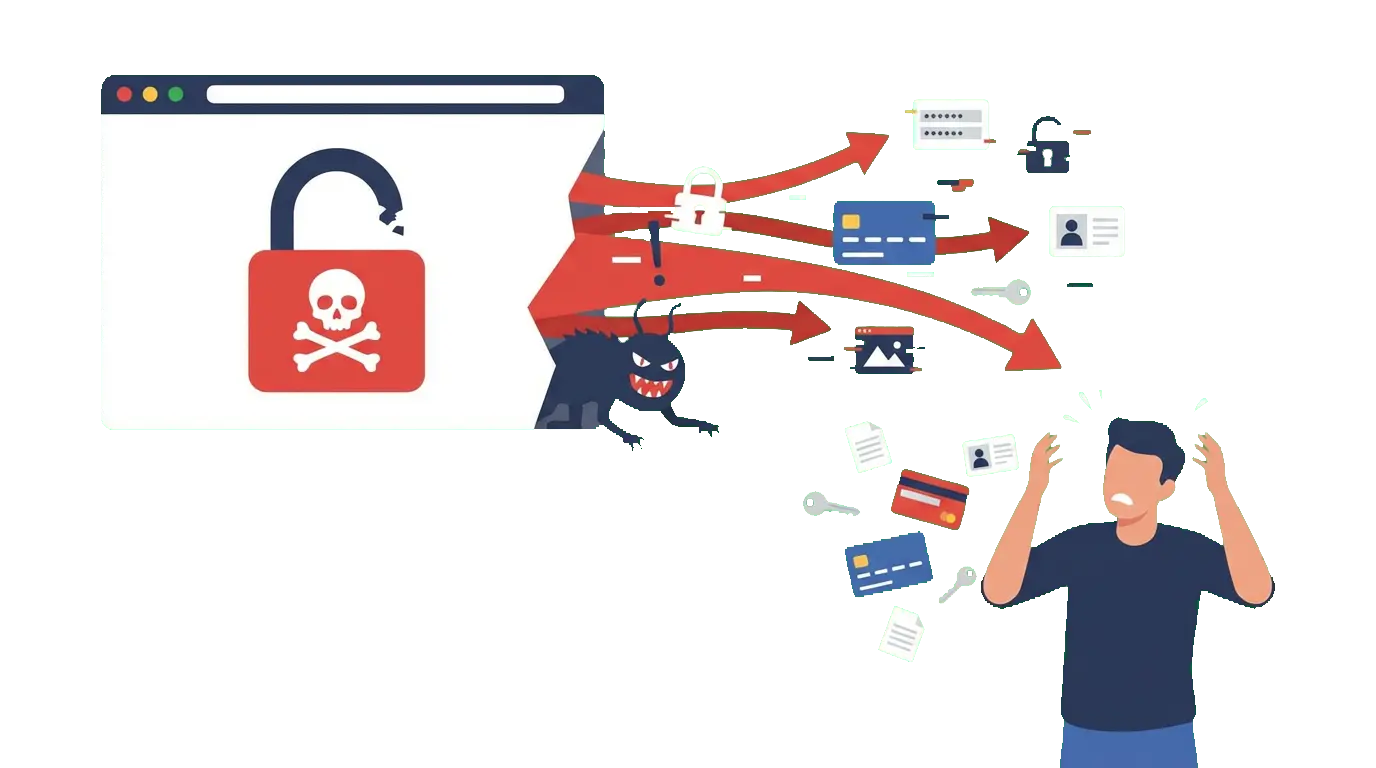
- Data Interception: On sites without SSL, data (passwords, card numbers, email addresses) is sent as "plain text". Cybercriminals can easily "catch" and read this information in the air, i.e., in transit, through hacker attacks (Man-in-the-Middle).
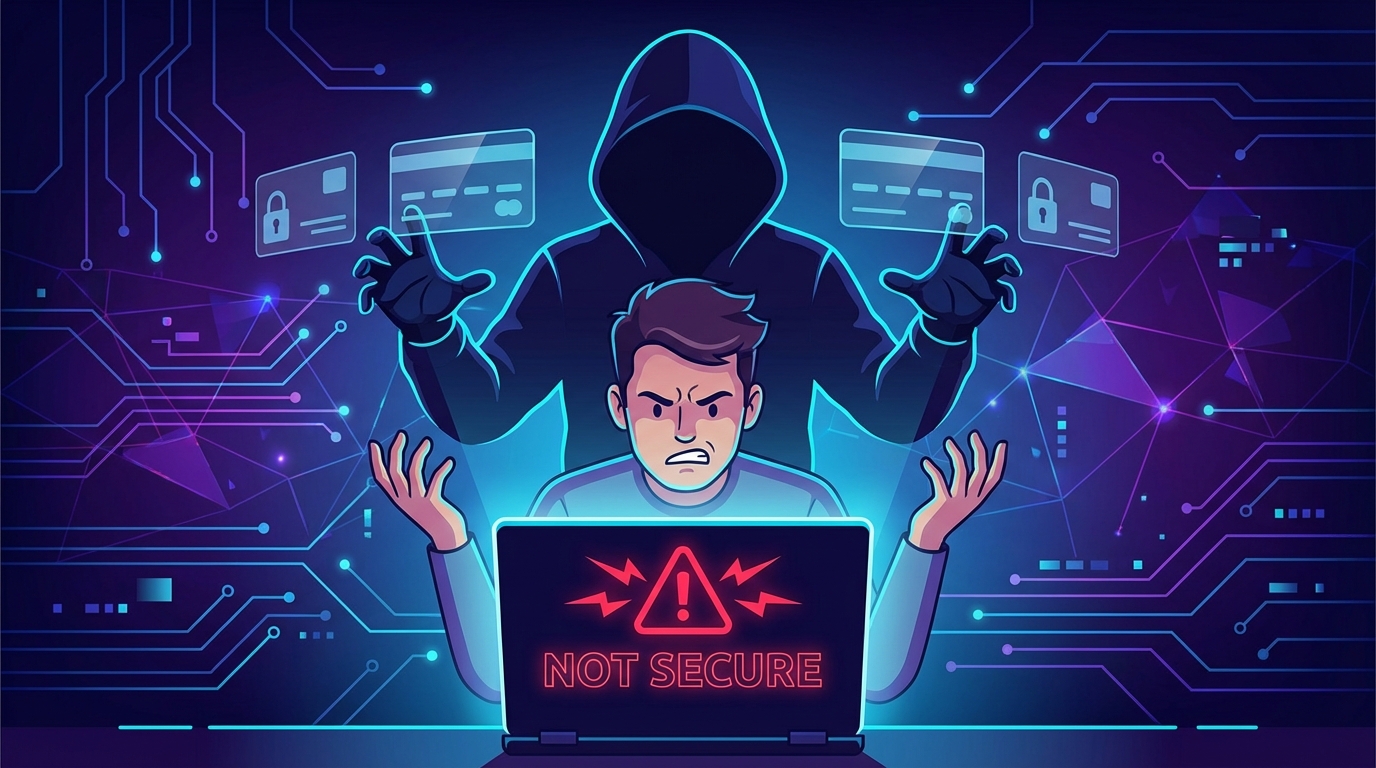
- Loss of Customer Trust: Modern browsers (Chrome, Safari, etc.) pursue very aggressive policies to protect users. When entering a site without an SSL certificate, a large red "Not Secure" warning appears in the address bar. This warning is the biggest reason for a potential customer to leave the site immediately.
- Decline in SEO and Google Ranking: Google prioritizes user security above all else. If your site does not have the HTTPS (encrypted) protocol, Google algorithms will penalize you by pushing you to the back pages of search results. Even if your competitor writes weaker content than you, they will appear higher in the rankings simply because they have SSL.
- Phishing and Cloning Threat: An SSL certificate is also a digital ID that confirms the site truly belongs to you. Without this ID, fraudsters can create an exact copy (clone) of your site to deceive your customers and destroy your brand's reputation.
Statistics: Numbers Don't Lie
The importance of an SSL certificate is not just a technical detail; it is proven by global figures that directly affect business revenue:
- Search Traffic Dominance: According to official data, more than 95% of the sites on the first page of Google (the top 10 positions) use the HTTPS standard. It is almost impossible to reach the top rankings without SSL.
- Bounce Rate: Global consumer research shows that 84% of online shoppers stop shopping and abandon their carts the moment they see the "Not Secure" warning in the address bar.
- Cost of Cyber Attacks: Globally, the average financial damage of cyber attacks and data breaches to small and medium-sized businesses is measured in tens of thousands of dollars. Studies show that 60% of small companies that experience a serious data breach go bankrupt and cease operations within the next 6 months.
Evolution of Security: From Past to Future
If we look at the short chronology of web security development, we can clearly see how SSL turned from a luxury into a necessity:
- Early 2010s (Luxury Only for Banks): At that time, SSL certificates were very expensive and difficult to install. Therefore, only banks and giant e-commerce platforms used encryption. For regular news or service sites, HTTP was considered completely normal.
- 2014-2018 (Google's Revolution): In 2014, Google officially announced that HTTPS was a "ranking signal." From 2018, the Chrome browser started marking all sites without SSL as "Not Secure." With the emergence of free SSL providers (e.g., Let's Encrypt), this technology became accessible to everyone.
- 2025 and beyond (Absolute Standard and AI Threats): Today, SSL is no longer a choice but a minimum requirement for a website to exist. In an era where automated hacker bots supported by Artificial Intelligence check millions of sites per second, not just SSL, but its latest versions (TLS 1.3 and above) have become the absolute standard to ensure data integrity.
Security Reality in the Azerbaijan Web Environment
While the digitalization of businesses in Azerbaijan has reached its peak in recent years, a dual picture exists in the cybersecurity approach.
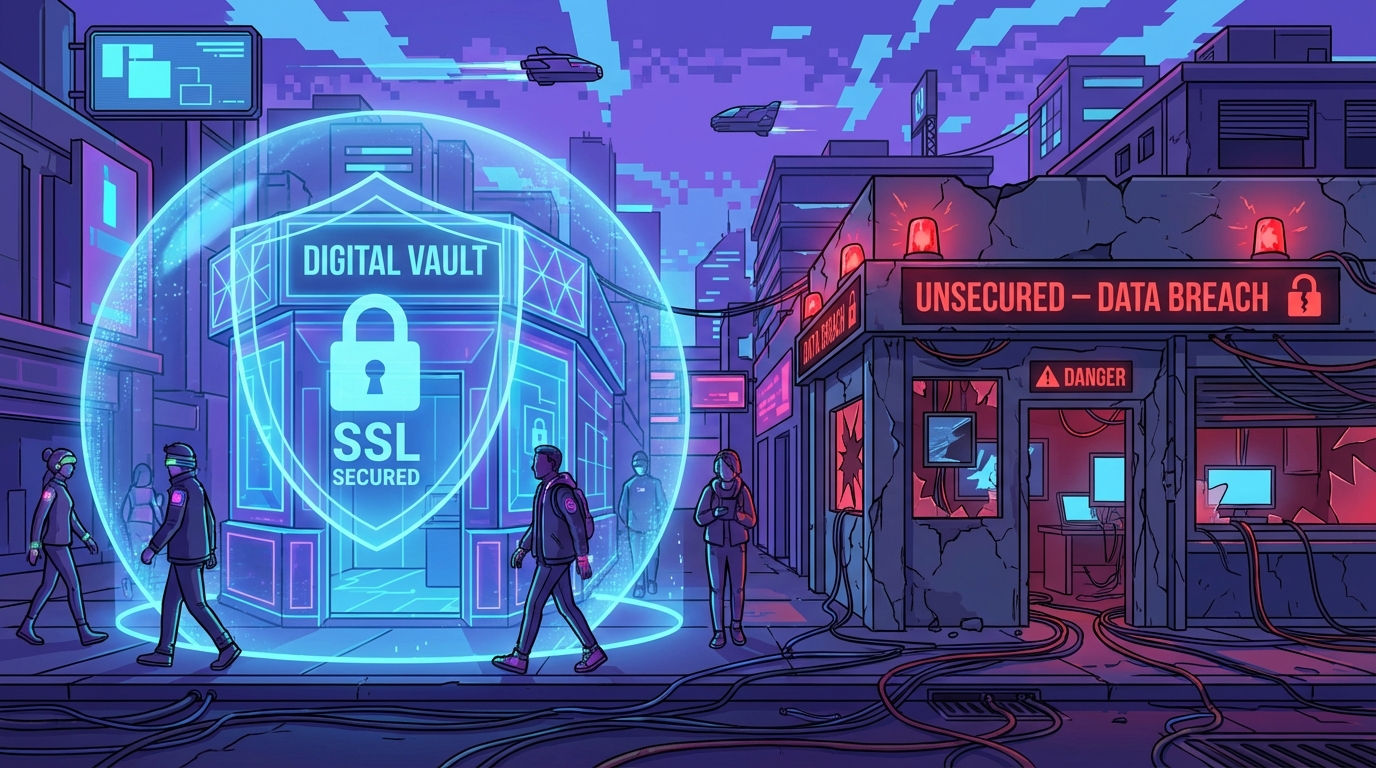
On one hand, our country's banking sector and large online trade platforms (delivery services, large marketplaces) have fully adapted to international standards and use the most advanced SSL and encryption methods. Local users are already accustomed to online payments and have developed the habit of looking for the "green lock" symbol when entering card information.
On the other hand, many local SMEs (Small and Medium Enterprises), personal blogs, ordering sites of some restaurants, and even websites of some medical institutions still operate over the HTTP protocol. These entrepreneurs think, "I don't have online payment on my site, I only have a contact form, so I don't need SSL." This is a huge mistake. Even when a customer just writes their name and phone number in that contact form, the risk of that data being stolen arises. Moreover, when a local user sees the "Not Secure" text, they immediately close the page without even looking at the content and head directly to your competitor.
An SSL certificate is the fundamental lock on the front door of your house in the digital world. No matter how expensive and high-quality products you sell inside, no one will dare to enter your house without that lock. In a scenario where your site does not inspire trust, is penalized by Google, and data can be stolen at any moment, business development is out of the question. If your website starts with "HTTP" today, what you are losing is not just data, but your customers' trust in you and the reputation of your business.