
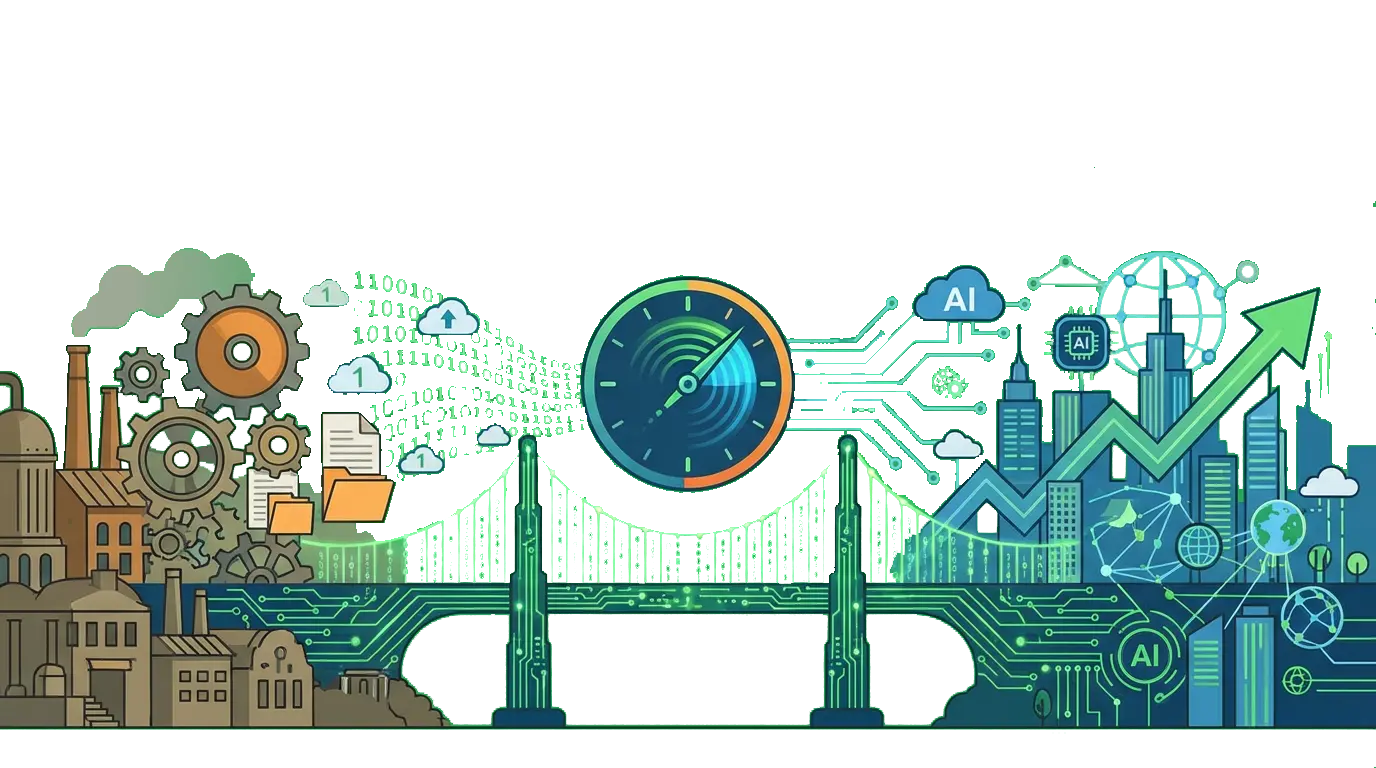
What Is Digital Transformation and Why Is It Inevitable?
Usually, the term “digital transformation” refers to companies moving from old mechanisms to new technologies. However, this is not only a technical innovation, but also a change in business philosophy. Today, the implementation of digital solutions in every field is becoming a necessity. For example, in Azerbaijan, the government is shifting to electronic services and companies are implementing projects based on cloud infrastructure. These processes show that digital transformation is not only a matter of words, but also a real direction of development.

What Is Digital Transformation?
Digital transformation is the process of improving business processes, customer services, and management through digital technologies. Old manual operations and paperwork are replaced with new systems (cloud, automation, mobile applications). For example, electronic mail and messaging are used instead of traditional postal letters, and cloud-based calculations are applied instead of physical calculators. The main idea is that a business should make its operations faster, more efficient, and more modern.
Digital transformation is important not only for companies, but also for management systems and entire countries. For example, e-government projects and online education programs are expanding in Azerbaijan, which is accelerating society’s adaptation to the digital sphere.
Why Is Digital Transformation Inevitable?
Delaying digital transformation is no longer a luxury, but a serious risk. The main reasons are as follows:
- Competitive advantage: In modern markets, companies that adopt digital technologies early grow rapidly. Otherwise, your competitors will leave you behind.
- Customer demands: People always expect to use the internet and mobile applications. Customers want fast online shopping, convenient payment methods, and 24/7 support. If a company does not meet these expectations, customer loss is inevitable.
- Efficiency and savings: Automation reduces human labor and minimizes errors. For example, moving invoices and billing documents to an electronic system reduces labor costs and helps save time. This also significantly lowers operational expenses.
- Pandemic and flexibility: Crises such as COVID-19 showed that it is difficult to continue work without cloud services and virtual tools for remote operations. Digital transformation enables companies to remain flexible under any circumstances.
- New opportunities: Digital technologies (Big Data, artificial intelligence, IoT) provide businesses with new analytics capabilities and service models. This makes it easier to create new business segments that generate revenue.
These factors show that digital transformation is no longer a topic of discussion — it has become an important change taking place across all sectors.
Benefits of Digital Transformation
Organizations that implement digital transformation gain several key advantages:
- Faster decision-making: Real-time data analysis helps management make the right decisions at the right moment.
- Improved security: Cloud and advanced encryption technologies protect data better and reduce the risk of cyberattacks.
- Creative collaboration: Teams can work on the same digital platform from anywhere — virtual meetings and shared document editing make it easier for teams to work together.
- Cost savings: Paperless offices and automated processes reduce costs. For example, digitizing documents eliminates postal and material expenses.
- Customer satisfaction: Active online services, chatbots, and round-the-clock support save customers time and increase loyalty to the company.
- Innovation and growth: New technologies open the way for new product and service models. This creates the opportunity to stand out in the market and generate new revenue streams.
Thanks to these benefits, digital transformation creates an important foundation for long-term development.

Steps to Prepare
Digital transformation requires not only technology, but also strategy. It is useful to follow the stages below:
- Analysis of requirements and needs: First, identify which areas of the organization need improvement. For example, what gaps exist in customer service, internal management, or analytics?
- Strategy and planning: Plan in advance who will lead the changes, which technologies will be selected, and what the target indicators will be. For example, determine how the new system will increase sales or save time.
- Pilot project testing: Test innovations in a small department. For example, apply digital tools in the customer support system or the internal document transformation process and measure the results. If the result is successful, expand the system.
- Team training: Train employees to adopt new technologies. Digital transformation is not only about the system, but also about the team’s approach; therefore, internal cultural change and education are important.
- Monitoring and optimization: After implementing the update, monitor the results, analyze them, and improve the system. Digital transformation is a dynamic process — new technologies and methodologies should always be tracked.
Digital transformation is not only innovation, but the destiny of business. It makes organizations more flexible, productive, and resilient. Delaying the transition to the digital world is no longer an option, but a risk. If your goal is sustainable growth, do not delay digital transformation — it is inevitable in the modern era.