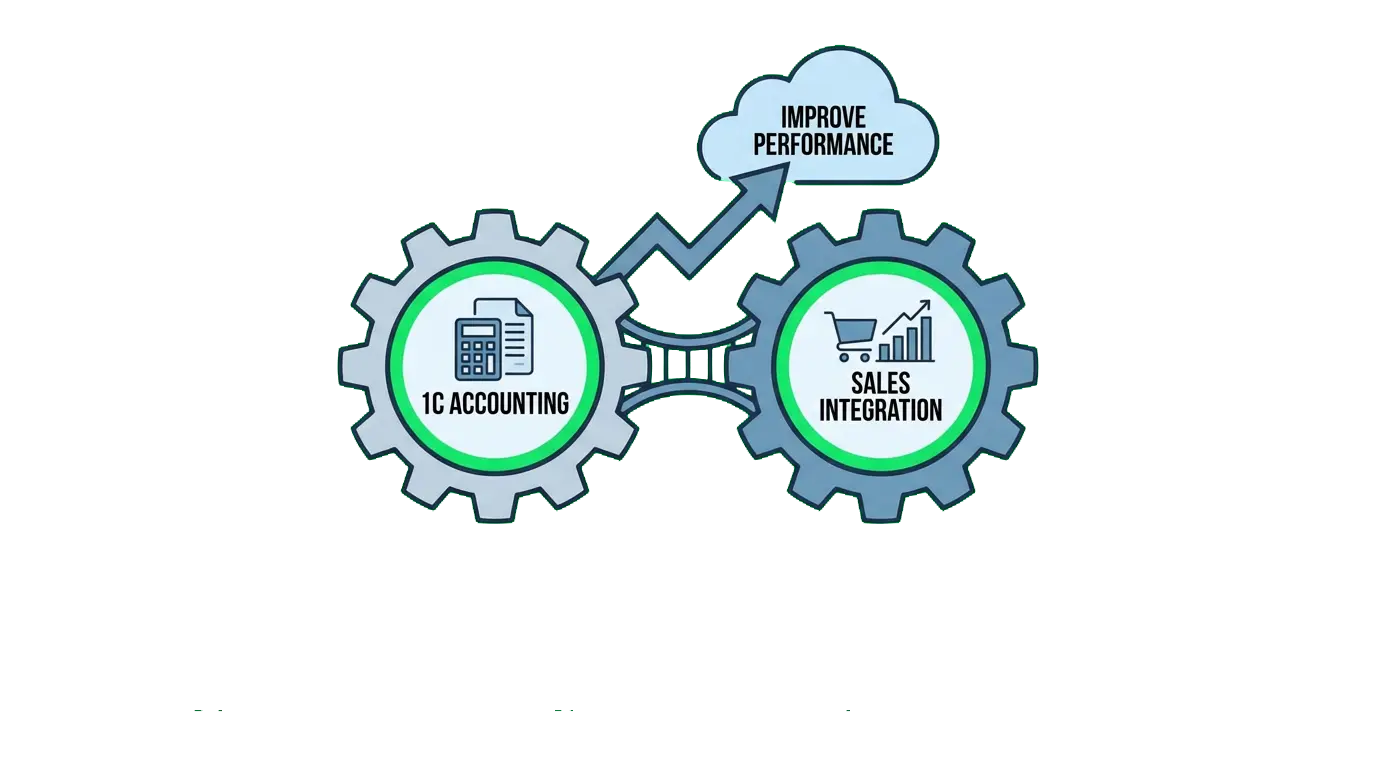
How Does Integrating 1C Accounting and Sales Improve Performance?
At the end of the day, the sales team tries to answer the question, “What did we sell today?” Meanwhile, accounting re-enters the same data into the system, checks documents, and corrects inconsistencies. Sounds familiar, doesn’t it?
This is not only a “too much work” problem — it is a performance problem. Because Sales and Accounting see the same number at different times. As a result, decisions are delayed, errors increase, and control over cash flow weakens.
That is exactly why connecting sales and accounting within 1C has become not just a “next step” in many companies, but a condition for growth.
What Do We Lose When They Work Separately?
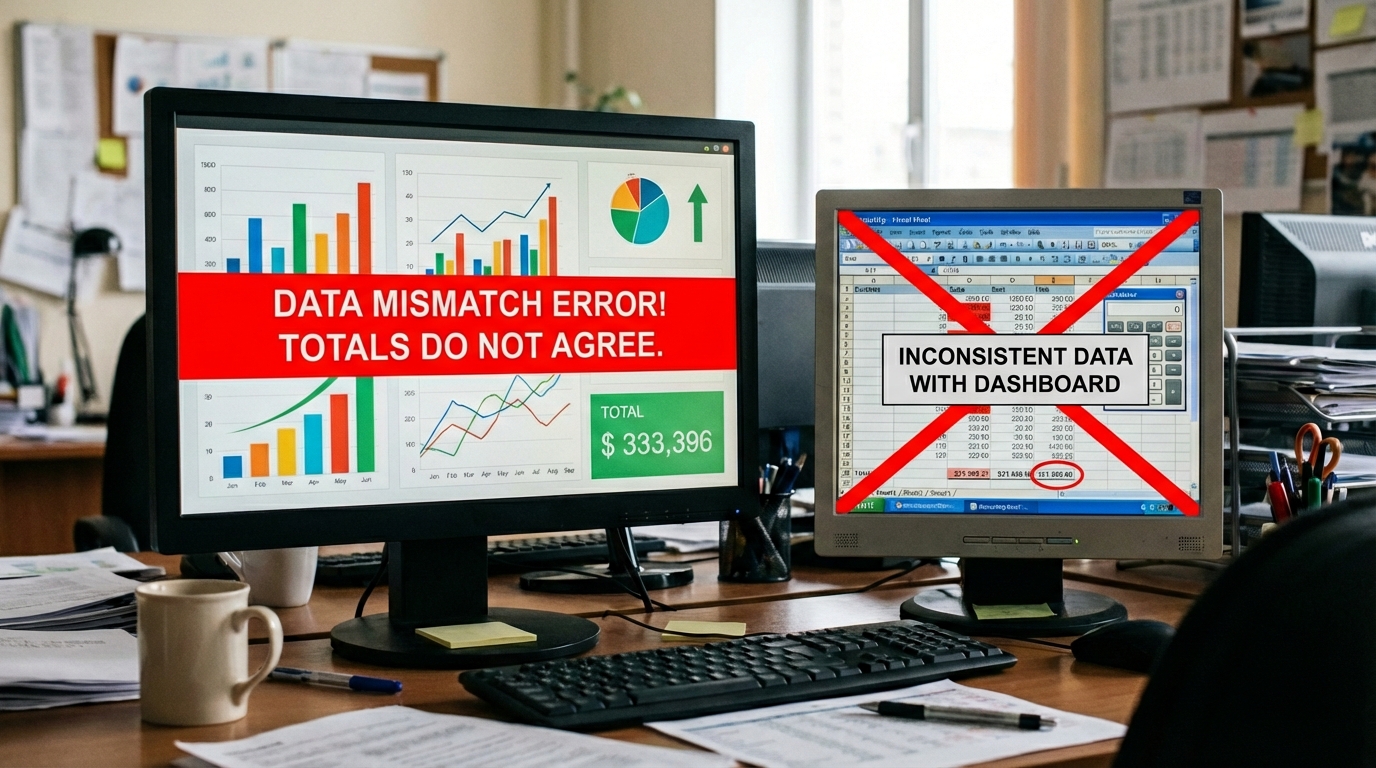
When Sales and Accounting operate separately, the first loss is time. The same data is entered twice, documents are reconciled, and days are spent asking, “Why did this number turn out differently?” The second loss is invisible: due to system delays, management controls the past instead of real time.
The worst part is that responsibility becomes blurred. Is the mistake in Sales or in Accounting? Since data is created in one place and modified in another, identifying the source becomes difficult.
What Does 1C Accounting and 1C Sales Integration Change?
The logic of 1C integration is simple: as soon as a sales transaction occurs, the correct accounting entry is generated simultaneously. This means that invoices, payments, accounts receivable, stock movements, and profit calculations work within the same flow.
In practice, this leads to the following results: a sales invoice is issued and the accounting entry is formed automatically; a product is sold and warehouse balances are updated instantly; a customer debt arises and appears in the receivables report in real time. In other words, not “we will fix it later,” but “it is correct right now.”
Where Does the Performance Increase Come From?
Integration increases performance from two sides:
First, operational speed. Since Sales, warehouse, and Accounting work with the same data, turnover accelerates. Month-end closing becomes less stressful, and reports are not delayed.
Second, accuracy. Manually entered data is always a risk. Automated flow reduces errors, strengthens the audit trail, and increases control. ✅
Third, decision-making. Management does not see the picture only at the end of the day, but during the day: which product sells more, which customer pays late, which branch’s margin is decreasing. When decisions are not delayed, results change.
The Fastest-Noticed Benefits After Integration
The cycle from sales to revenue shortens, document flow accelerates
Warehouse balances become more accurate, “stock surprises” decrease
Accounts receivable come under control, cash flow becomes more planned
Reports are generated on time, month-end workload becomes lighter
These results are felt not as a “new feature,” but as a “new order.”
Essential Steps for Successful Integration
Integration starts as a technical task but ends as a process task. If you plan these 5 points in advance, the result becomes more stable:
Standardize data: product names, units of measurement, customer cards must follow the same structure
Clarify roles and permissions: who can change what, and who can only view?
Write the document flow: order → invoice → payment → accounting sequence must be clear
Run a test phase: check with real sales, then fully implement
Train the team: the system may be strong, but if usage is weak, benefits decrease
This approach reduces the stress of a “sudden big change” and increases user adoption.

The Most Common “Stumbling Blocks” During Integration
The most sensitive part of integration is the data itself. If product nomenclature has one name in Sales and another in Accounting, even the best system will produce confusion. The same rule applies to pricing, discounts, and return processes: if the rule is not written, “surprises” appear in accounting.
Therefore, before integration, it is important to allocate a “master data” phase: product cards, units of measurement, customer codes, and tax parameters must be unified. This work takes some time, but it saves months of corrections later.
What Does a Practical Approach Require in Azerbaijan?
In Azerbaijan, many companies use 1C for accounting, while sales operations are conducted either in a separate program or manually. This gap increases the value of integration: when sales reach accounting late, it means delayed reporting and delayed decisions.
If sales volume is growing and you work with inventory, integration becomes the most noticeable turning point. The healthiest way to start is not to do “everything in one day”: first integrate the most frequently used documents (sales invoice, payment, warehouse dispatch), then gradually expand modules and processes.
Integrating 1C Accounting and Sales improves performance because data comes from the same source, is updated simultaneously, and allows the team to focus energy on results rather than repetitive work. If your goal is speed, accuracy, and control, leaving integration on the “we will do it later” list may be costly. Start, measure, and scale gradually. ✅