In 2026, at the intersection of biotechnology and artificial intelligence, one of the most ambitious projects is the creation of a complete digital model of the human cell. This concept is known as the “Digital Twin Human,” and its goal is to simulate the molecular-level behavior of a living cell within a computational environment.
This is not just medical analysis. It is the creation of a digital replica of a living biological system.
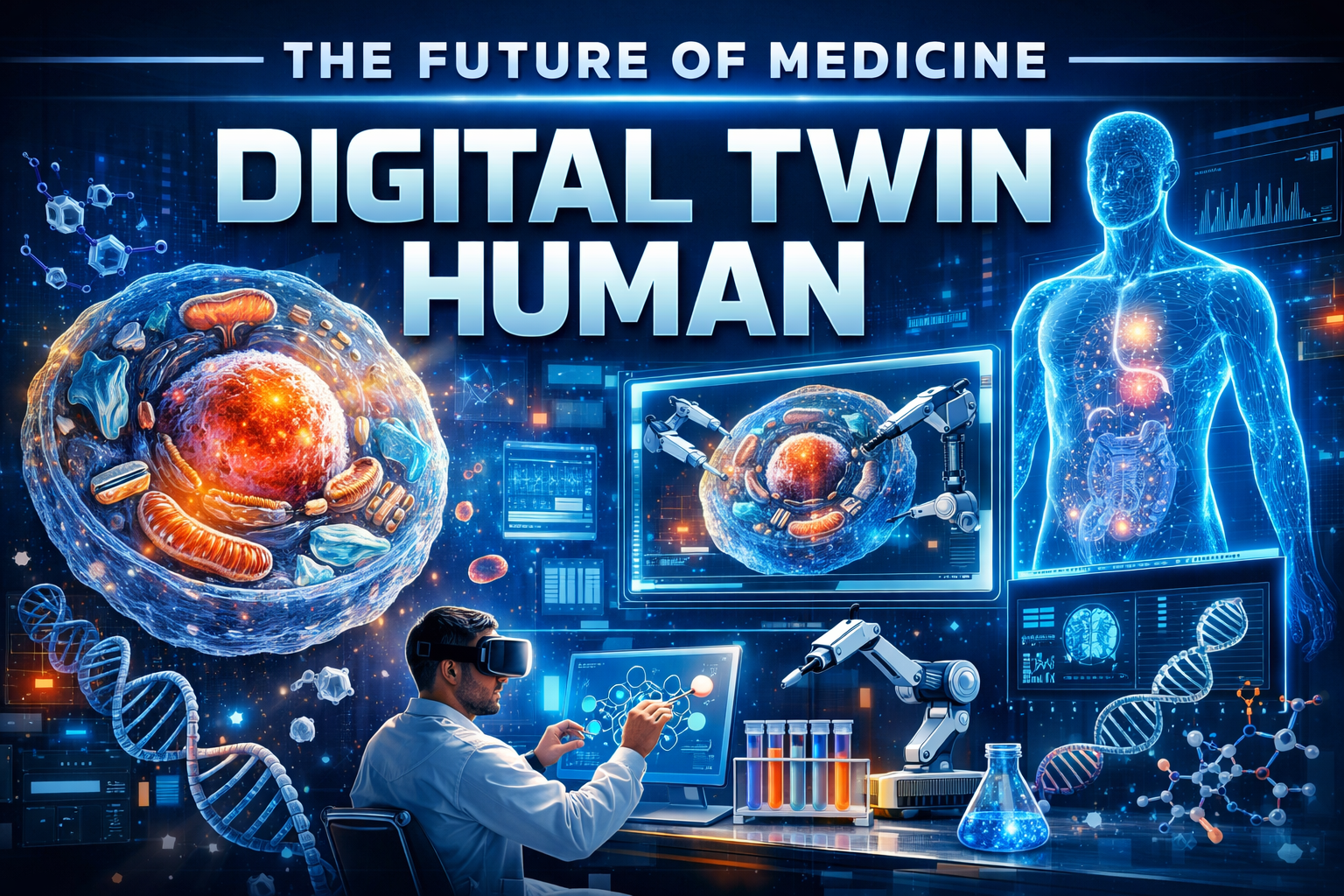
The concept of a “Digital Twin” was first applied in industry. A digital model of a factory or equipment is created, fed with real-time data, and used for simulation and optimization.
Now, the same principle is being applied to human biology:
The genetic structure of the cell
Protein synthesis
Metabolic processes
Intracellular signaling
Drug responses
All of these elements are incorporated into the model.
Several major research initiatives are advancing this field, including:
Human Cell Atlas – mapping human cells
Broad Institute – genomics and cellular research
Allen Institute for Cell Science – cellular structure modeling
These institutions analyze cellular structure and function using AI technologies.
Previously, cell analysis was static—based on microscope images and lab results.
Now:
3D cell models are being constructed
Changes over time are simulated
Drug effects are predicted in advance
Disease scenarios are tested virtually
This significantly reduces risk before real clinical trials.
Artificial intelligence plays three major roles:
Genomic data, protein maps, and laboratory tests are measured in terabytes. AI processes and interprets this data.
Thousands of intracellular interactions are too complex for manual calculation. AI simulates them in parallel.
For example:
How will a specific drug affect the cell?
Which disease might result from a genetic mutation?
What will be the treatment response?
The Digital Twin concept reshapes personalized healthcare.
A future scenario may look like this:
A patient’s genome is analyzed
A digital model of their cells is created
Multiple drugs are tested virtually
The optimal treatment is selected
This minimizes the traditional “trial and error” approach.
Cancer cells evolve rapidly and differ from patient to patient.
A digital model can:
Simulate tumor growth dynamics
Predict chemotherapy responses
Forecast resistant mutations
This has the potential to significantly improve survival rates.
This technology raises important questions:
Genetic data security
Use of biological data by insurers or employers
Government surveillance risks
Commercialization of biological data
Biological data is considered one of the most valuable resources of the future.
Several challenges remain:
Fully modeling all molecular interactions is extremely complex
High computational power is required
Energy consumption is significant
Biological systems are nonlinear and dynamic
However, AI advancements are gradually reducing these barriers.
If progress continues at this pace:
Virtual clinical trials will expand
Personalized drug manufacturing will accelerate
Preventive medicine will strengthen
Diseases will be detected earlier
This could fundamentally transform healthcare systems worldwide.
23-Feb-2026 80
You can get advice, clarify prices and order a solution from the specialists of 1C OPTIMA AZERBAIJAN. Contact us by phone, e-mail or request a call back.